Sunday, May 16, 2010

Mas Que Nada and a Hodgepodge of Garden Tasks


Gil & I tackled the seemingly formidable slope on the back side of our house today, and managed to trench through the decomposed granite with some modicum of success. This veritable wasteland of black mustard, filaree, and star thistle was starting to get on my nerves, to say the least...but alas, upon our fourth year of residence here in La Cresta, we've finally had the time and inclination to tether this wild and wily segment of the property. Goal is to put in more grape vines, avocados, and any other fruiting tree that suits our microclimate. The first plants we installed here were 'Fuerte' Avocado, 'Stewart' Avocado, 'Ruby' Seedless Grape, and 'Snow Queen' Nectarine. The Avocados are Mexican varieties and fairly cold tolerant (to about 20F), while the 'Snow Queen' nectarine is a self-fruitful, sweet freestone that requires just under 300 chilling hours (good for Southern California). The new plants were amended with good, well-draining garden soil and are being irrigated by drip.

In the meantime, the natives in the garden continue to shine ...

5/16/10 Elegant Clarkia (Clarkia unguiculata). From seed sown over the winter. With sufficient rains, a large stand of these can be always found in the springtime blooming along the fire road en route to the Gabrielino Trail in the Arroyo Seco (San Gabriel Mountains, LA County). 

5/16/10 Wild Hyacinth (Dichelostemma multiflorum).

5/16/10 Desert Columbine (Aquilegia shockleyi). I believe this species has now been reclassified as Aquilegia formosa in the Jepson Manual. But, hey - I'm eternally confused and frustrated by constant taxanomic changes, so in this case, I'm going to simplify my life by sticking with the nursery label.

5/16/10 Acton Encelia (Encelia actonii). A desert Encelia that I've seen around the Salsberry Pass area of Death Valley National Park. This one looked almost dead after our cold, wet winter, but has now sprung back to life. A plant you could kill by watering it in the summer.

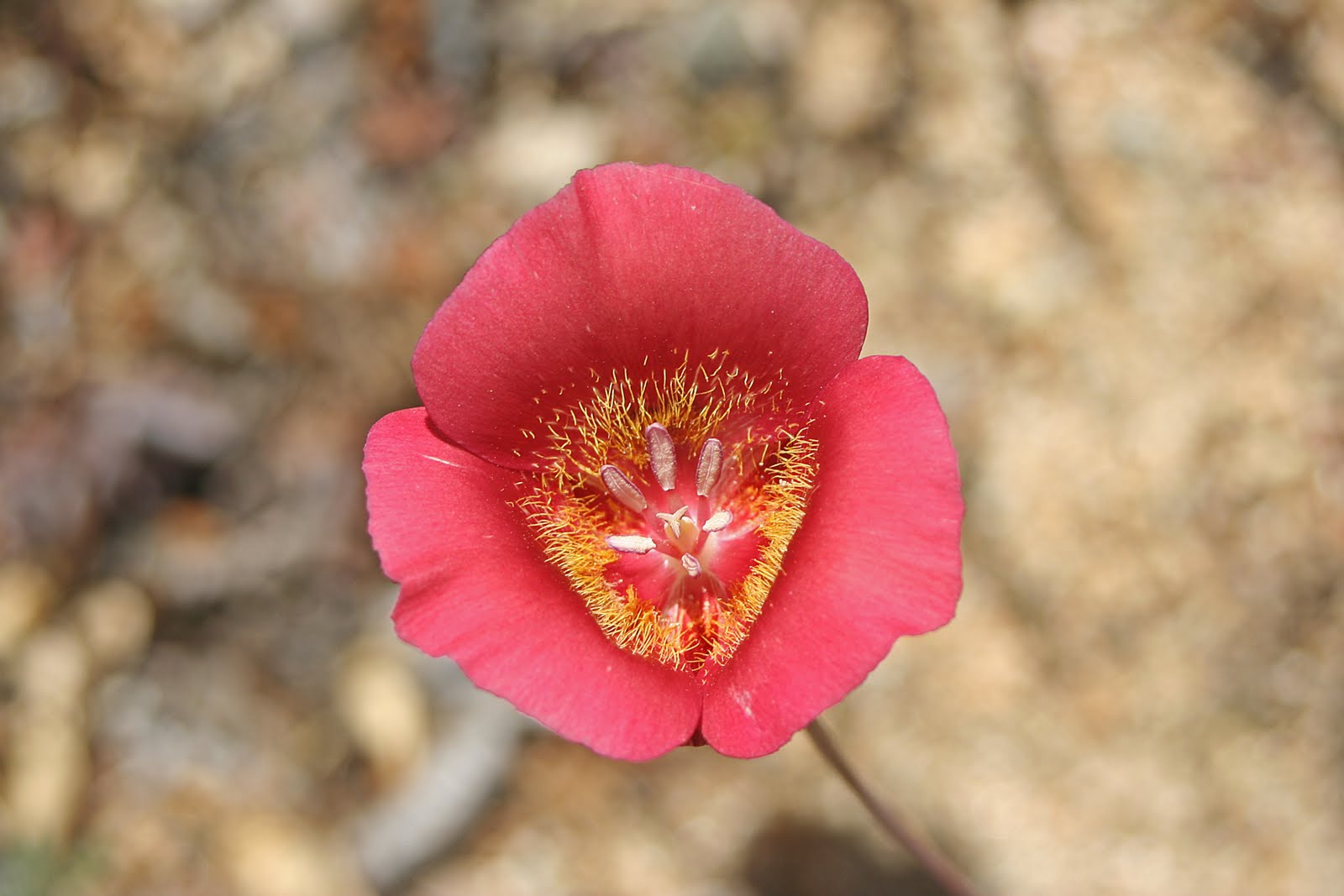
5/16/10 'Red Form' Butterfly Mariposa Lily (Calochortus venustus var. sanguineus). From Telos Rare Bulbs (planted last fall).


5/16/10 Matilija Poppy (Romneya coulteri). Some call it the 'Fried Egg' Flower. This has got to be the largest California native wildflower around, with its crinkly-textured petals spanning around 5 inches across. A tough, tall (up to 8 ft.), drought-tolerant plant, this beauty is not for the faint of heart nor for the short on room. It's a bit prickly and can spread aggressively via underground rhizomes. But if you've got the space, then I highly recommend. It'll have your neighbors turning their heads, in a good way.

5/16/10 Chaparral Mallow (Malacothamnus fasciculatus).

5/16/10 'Hanging Valley' Santa Lucia Bush Mallow (Malacothamnus palmeri).

5/16/10 Wishbone Bush (Mirabilis californica).

5/16/10 'Pink Ribbons' Clarkia (Clarkia concinna).

5/16/10 Western Columbine (Aquilegia formosa).

5/16/10 Apache Plume (Fallugia paradoxa). A member of the Rose family, this desert shrub makes for a beautiful accent in the dry garden. The billowy seed heads are in many ways more showy and attractive than the actual flowers.

5/16/10 'Vicki Romo' White Sage (Salvia apiana x clevelandii).


4/25/10 Stream Orchid (Epipactus gigantea). This one is growing and proliferating in an old wine barrel, along with Seep Monkeflower (Mimulus guttatus) and Jeffrey's Shooting Star (Dodecatheon jeffreyi). Thrives on lots of water.

5/16/10 Narrowleaf Onion (Allium amplectens).

4/25/10 Wood Lupine (Lupinus truncatus). Reseeded from last year.

4/25/10 Baby Blue Eyes (Nemophila menziesii).

5/16/10 Dwarf Silver Bush Lupine (Lupinus albofrons collinus). Needs good drainage, so I've got it potted in sand and cactus mix.

5/16/10 White Sage (Salvia apiana). The flower spikes are about 5 feet tall!. Bees love it, and so do I...Foggy this morning, hence the hazy backdrop.


Sunday, May 9, 2010

"Roses, roses, roses, I thank all the roses that bloom in the spring..."

Snazzy, jazzy words and music by Ray Gilbert and Dori Caymmi, with the best rendition done, IMHO, by the late, great Sarah Vaughan (sorry Andy Williams). But I digress.

I hard pruned my hybrid tea roses and lightly trimmed the shrub & English roses in late January. I also amended the rose beds with bone meal, fish emulsion and rose fertilizer in March. Then about 2 weeks ago, I was amazed to see that almost every rose bush had burst forth in show-stopping bloom! I've just never seen these gals looking as fantastic as they do right now since planting them almost 4 years ago. Twasn't me, but rather great weather and mother nature...

4/27/10 'Audrey Wilcox' Hybrid Tea Rose.

5/2/10 'Margaret Merrill' English Legend Rose (Harkness of England).

5/8/10 'Margaret Merrill' English Legend Rose (Harkness of England).

5/2/10 'By Appointment' English Legend Rose (Harkness of England).

5/2/10 'Ingrid Bergman' Hybrid Tea Rose.

5/2/10 'Miss Dior' English Legend Rose (Harkness of England).

5/8/10 'Miss Dior' English Legend Rose (Harkness of England).

4/25/10 'Falstaff' David Austin English Rose.


5/8/10 'Jude the Obscure' David Austin English Rose. One of my favorites, for both flower form and exceptional fragrance. Not a real fan of Jude the Obscure from Thomas Hardy's namesake novel (although the character came before the rose), as the whole thing was a real downer, if you know what I mean.

5/16/10 'Chicago Peace' Hybrid Tea Rose. Lovely pink and copper tones...

5/8/10 'Dove' David Austin English Rose.

5/8/10 'Dove' to the left, 'Margaret Merrill' to the right.

5/8/10 'Heirloom' Hybrid Tea Rose.

5/8/10 Rose bed in front of the kitchen herb garden.

5/20/10 Apothecary's Rose (Rosa gallica officinalis). A much-heralded, historic old garden rose, perhaps originating from ancient Persia, and likely introduced to Europe by knights of the Crusades. Hails back to the 12th century or earlier. During the War of the Roses in medieval England, it became a symbol of the House of Lancaster vs. the white rose (Rosa alba) of the House of York. Very fragrant, and once-blooming in late spring.

5/22/10 'Scentimental' Floribunda Rose ('Playboy' x 'Peppermint Twist,' hybridizer Tom Carruth 1997). A tribute to my grandmother.

6/13/10 'Gentle Giant' Hybrid Tea Rose.

6/13/10 'Moonstone' Hybrid Tea Rose.

5/8/10 Hana in 'Yoda' mode.

I will add more rose pix to this post as they bloom over the season. No mildew, no aphids (thank you lady bugs!), and terrific blooms this year...what more could I ask for?

Saturday, May 1, 2010

Bloomalicious Beauties...Cal Natives in their Springtime Glory

4/25/10 Showy Penstemon (Penstemon spectabilis). One of the very first natives I planted in my garden when we moved to the property in 2006. Since then, the two 1-gallon plants purchased from Theodore Payne have reseeded and there are over 10 "volunteers," all of which are on the verge of flowering. Very showy and up to 4' tall. Found in coastal sage scrub & chaparral communities of the Peninsular & Transverse ranges.
 
4/27/10 'Eleanor' Monkeyflower (Mimulus cultivar).

Rattan's Beardtongue (Penstemon rattanii). Native to North Coast & Klamath ranges and the Bay Area. Works great in a woodland garden. In warmer inland areas, best in partial shade. Got mine growing in regular garden soil on drip.

4/27/10 'Sunset' Monkeyflower (Mimulus cultivar).

4/27/10 Wind Poppy (Stylomecon heterophylla). Native to grasslands & chaparral. 

4/25/10 Pink Showy Penstemon (Penstemon pseudospectabilis).

4/25/10 Chinese Houses (Collinsia heterophylla).

4/27/10 Golden Columbine (Aquilegia chrysantha). A Southwest native (not a Cal native), but equally at home in our climes.


4/27/10 Penstemon 'Margarita BOP'

4/27/10 Orange Sneezeweed/Owl's Claws (Helenium hoopesii). Some gnarly looking petals, like they got up out of the wrong side of the bed...


4/27/10 Catalina Mariposa Lily (Calochortus catalinae). Planted four bulbs (from Telos Rare Bulbs) last fall, and they've actually bloomed...Yahoooo!! Per the Jepson Manual, they are uncommon and found in heavy soils in open grasslands & scrub. Native to the S. Central Coast, South Coast and Channel Islands. I've come across these in the springtime hiking along the Grotto Trail (Circle X Ranch) and Pentachaeta Trail in the Santa Monica Mountains, and also on Figueroa Mountain in the Los Padres National Forest (Santa Barbara County).

4/27/10 Peninsular Onion (Allium peninsulare). A really showy native allium. Doing well so far in our decomposed granite. 

4/27/10 Fringe Cups (Tellimia grandiflora). This one likes shade, good soil, and moisture. A north slopey kinda plant. 

5/1/10 Hana in daydreaming mode...