Monday, August 2, 2010

Treks on the Santa Rosa Plateau: The Sounds of Summer

Early morning on July 25th, we trekked out to the Plateau to check out the happenings around the main vernal pool. The grasses had completely dried out by now, and what remained was an amazing expanse of gilded splendor. Beauty can still be found in every season. Lots of metallicy-black, wasp-like insects flying around that day. Some had the tell-tale red-black color of Tarantula Hawks, so I'm wondering if they were actually ALL Tarantula Hawks (poor Tarantulas!)

7/25/10 Vernal Pool Trail.

7/25/10 San Diego Button Celery (Eryngium aristulatum var. parishii), sayin' sayonara for the season. Main Vernal Pool. 

7/25/10 San Diego Button Celery (Eryngium aristulatum var. parishii). This bunch is almost past its prime, but a tad less so than the batch above. Main Vernal Pool.

7/25/10 Laurel Sumac (Malosma laurina). The blooms on this ubiquitous chaparral shrub were also winding down from their full glory (going from a creamy white to a dullish beige). Vernal Pool Trail. 

7/25/10 Main Vernal Pool. The wetlands are not so wet anymore. 

7/25/10 Boardwalk over Main Vernal Pool.

7/25/10 Here's a cool-looking snake. I've only seen the Two-Striped Garter Snake (Thamnophis hammondii) in the main vernal pool, so don't quite recognize this fellow, as he doesn't appear to have any stripes whatsoever. However, maybe they don't always look the same, depending on season, age, molting, etc. Will try to verify ID with the rangers at the visitor center the next time I drop by there. 

7/25/10 Alkali Mallow (Malvella leprosa). Main Vernal Pool.

7/25/10 Remnants of Wild Hyacinth/Blue Dicks (Dichelostemma capitatum) in the grasslands. Vernal Pool Trail.

7/25/10 Prickly Lettuce (Lactuca serriola L.). A biennial, taprooted weed native to Europe. i.e., a non-native, which has naturalized throughout much of the U.S.  Yuck. This is one of those wily, ornery weeds that's also prevalent on our property. It's really quite prickly along the stems, so I have to wear gloves when weeding it. Vernal Pool Trail. 

7/25/10 Prickly Lettuce (Lactuca serriola L.). Vernal Pool Trail.

7/25/10 Turkey Mullein/Dove Weed (Croton setigerus). Vernal Pool Trail. 

7/25/10 Oddly enough, some fog rolling in around 10:30am over the main vernal pool on the Mesa de Colorado as we were hiking out to the Trans Preserve Trail. A bit unusual for this late in the morning, especially in late July. 

7/25/10 Bull Thistle/Cobweb Thistle (Cirsium vulgare)? If so, then another Euro weed. Doesn't resemble our native thistles Cirsium occidentale var. occidentale or Cirsium occidentale var. californicum, which are also found on the reserve. Trans Preserve Trail.

7/25/10 Trans Preserve Trail. Toto, we are still in Kansas any more... 

7/25/10 White-tailed Kite (Elanus leucurus). Main Vernal Pool. 

7/25/10 Hmmm. This one looks almost like a Pygmy Nuthatch (Sitta pygmaea), but then, I've only seen and heard of White-breasted Nuthatches (Sitta carolinensis) on the Plateau. Not a good photo, but this guy was as fidgety and flighty as they come. Split the difference? I'll leave that to the expert birders, but if anyone can ID, I'd love to know.* Trans Preserve Trail.


Other birds we saw on our hike today:

Phainopepla/Silky Flycatcher (Phainopepla nitens) - Trans Preserve Trail
Lesser Goldfinch (Carduelis psaltria) - Vernal Pool Trail
Acorn Woodpecker (Melanerpes formicivorus) - Trans Preserve Trail
Turkey Vulture (Cathartes aura) - overhead, main vernal pool
Cliff Swallows (Petrochelidon pyrrhonota) - overhead, main vernal pool


*Postscript on the Nuthatch: On 11/21/10 Dick Cronberg (professional wildlife photographer who has taught photography classes & also a recent bird ID class at the reserve) helped me to ID this bird as a White-breasted Nuthatch. His observations: rufous markings under the tail, dark wing tips above the tail feathers and a faint wing bar. Thanks, Dick!

Sunday, July 18, 2010

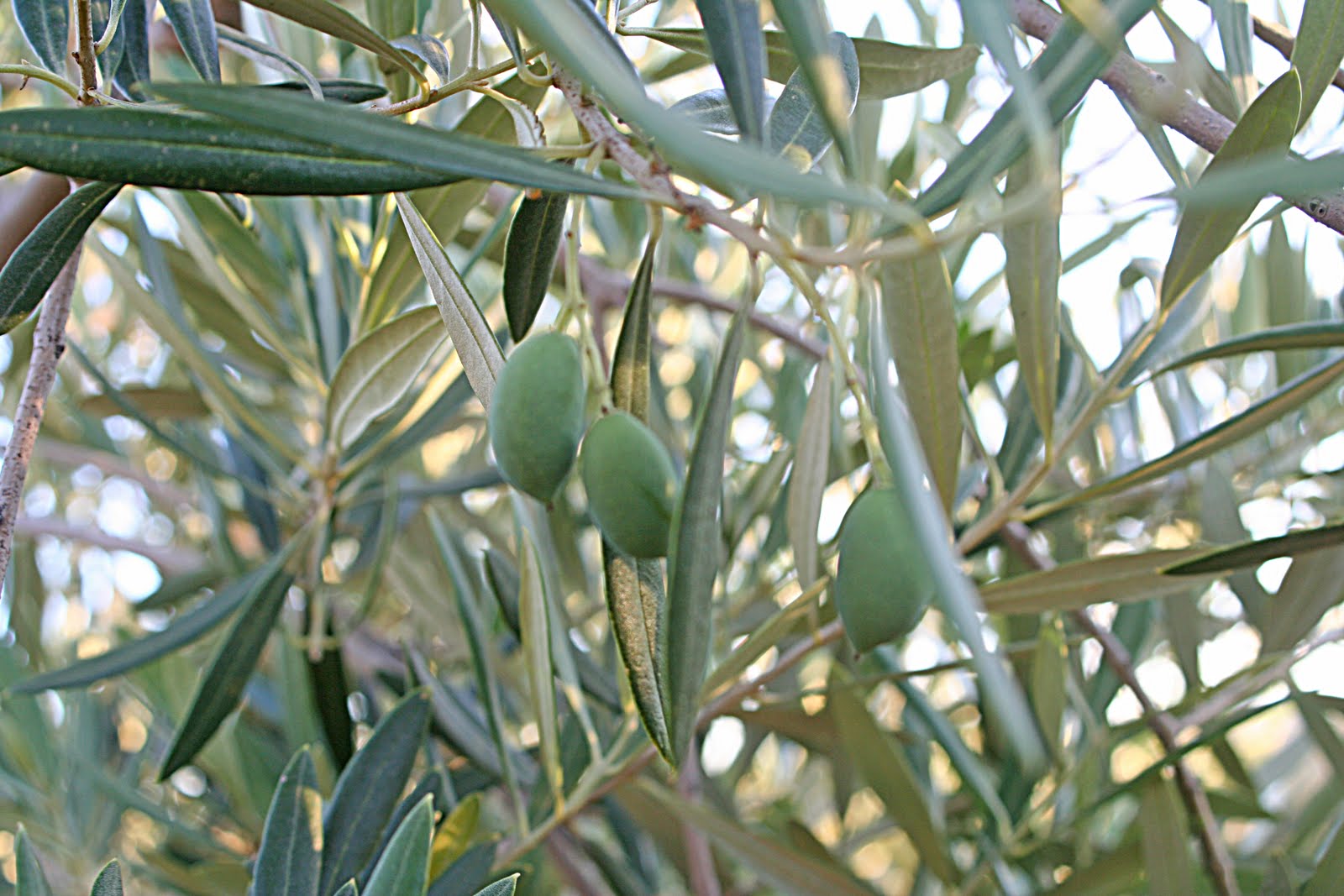
Back online and what does one do with Olives?!!

Well, I'm finally back online and blogging again after a bit of a hiatus due to a gardening-induced eye injury. Yes, gardening is not as innocuous an activity as it may seem, especially to the uninitiated. Some of the hidden dangers include: accidentally falling into a thorny rosebush whilst deadheading (an understandable freak-out reaction to a grasshopper); getting stung to kingdom come on both legs by a horde of angry red fire ants while cluelessly standing right next to their mound (I like their Spanish name "Hormigas Rojas del Fuego" - Si!! and the pain is excruciating - you'll rail against God after getting bitten by one or many of these *&%$##!!); falling on your bum and spraining your ankle while trying to navigate a dry gravelly slope in your back yard wearing Tevas (tennies & hiking boots are a MUCH better choice, along with avoiding those fruity summer cocktails, which give you a false sense of bravado when gardening); standing less than three feet away from a 4-ft. long Red Diamondback Rattlesnake in your herb garden while watering your plants AND the snake with a garden hose (with the snake looking genuinely perplexed by the stream of water hitting its forehead); and getting third degree burns from the pure imbecility of extreme gardening in triple digit heat without the benefit of sunscreen.

Sadly, I've been there and done all these things, and now I can add poking my eye on a bone dry, hard-as-a-tack seed head of a Clarkia while frenetically weeding. Who woulda thought? A Clarkia?? Anyhoo, had really blurry vision for about 24 hours and was on antibiotics for 5 days, just in case.  Avoided the computer except for work, but now all appears to be A-ok.

On to my Olive SOS. We've got eight olive trees on the property and it looks like we're finally going to get our first real crop this year. We have 3 Missions, 3 Manzanillos, 1 Arbequina, and 1 Leccino. The most prolific of the bunch is the Spanish olive 'Arbequina,' followed by Mission and Manzanillo.

7/17/10 Arbequina Olive 

7/17/10 Arbequina Olive

7/17/10 Mission Olive

7/17/10 Manzanillo Olive

So the million dollar question is, when do I harvest and what the heck do I do with them after? I doubt I have enough olives to make olive oil (although I do fantasize about hitching my adorable but otherwise useless pooch, with fake donkey ears and all, to a stone mill to produce our own proprietary brand of EVOO). What about curing or brining? I've done some research online, but the process seems daunting. If anyone has some simple, user-friendly suggestions for what to do with a home-grown olive crop, I'd love to hear from you!

7/17/10 Mission & Manzanillo Olives

7/17/10 Left to right: Manzanillo, Leccino & Arbequina Olives

Thursday, July 1, 2010

My New Mission is to see all the Missions...First Stop: San Juan Capistrano

It's not like I've never been to any of the California missions before, but I seem to have a renewed interest in the early history of our state, in particular, that era before California was even a state. Hopefully one of the more desirable symptoms of getting older (and therefore more obsessed with the notion of antiquity).


Gil & I have been to the Santa Barbara mission a couple times over the past 10 years, and have been to Mission San Juan Capistrano once almost 20 years ago. I enjoyed those visits, but that's about all I can say or recall of those bygone times.


With this week off for my summer vacation, and Gil only free for a couple days in the mix, I thought it would be fun for a relaxing day trip to revisit the Mission at San Juan Capistrano. So that we did yesterday, and boy - all I can say is that it was really an amazing, fantastico experience. Wonder why I didn't think that the first time around? Well, I can answer that question. Back in the day, I simply was not the gardening fanatic that I am now. And who wouldn't go totally apey/gaga over the gardens at this mission?!


6/30/10


The mission at San Juan Capistrano was founded on November 1, 1776 by Junipero Serra, a Franciscan friar, born in Majorca, Spain in 1713, who made his way to Mexico, Baja California, and then Alta California to establish 9 of 21 missions over the course of 54 years. These missions span from San Diego all the way north to Sonoma. 

Their mission? To convert the Native Americans to Christianity, and bring them into the fold of civilization (and, by inference, creating new loyal subjects for the mother country of Espana). Be that as it may, and however you want to argue the pros and cons of the padres' divine directives, at their height the missions herded hundreds of thousands of cattle, horses, pigs, sheep and goats, and were largely self-sustaining communities. Pretty impressive for such rustic establishments. By 1833, the missions were secularized under Mexico's secularization laws, with dire consequences for the thousands of Native Americans who were supposed to inherit these lands, but who largely ended up with nada through force or subterfuge, which are often two sides of the same coin. Needless to say, thus also began the decline of many of the missions' grounds and structures. For more on the history of the California missions, check out  http://en.wikipedia.org/wiki/Spanish_missions_in_California 

So here we are today (or rather yesterday). We joined a free tour of the gardens at Mission San Juan Capistrano with a docent, a lovely lady, originally from England with great accent and matching sense of humor. 

6/30/10 Front Garden. Clockwise, left to right: Bird of Paradise (Strelitzia reginae), Roses, Geranium (potted), and Statice (Limonium perezii).

6/30/10 Front Garden. Birds of Paradise (Strelitzia reginae). 

Mind you, most of these plantings are not original to the mission, but were lovingly planned & installed by a volunteer group of devotees, who wanted to bring some joie de vivre back to the grounds which had kind of gone to the weeds after years of neglect. They've done an amazing job!

6/30/10 Front Garden. Mexican Bush Sage (Salvia leucantha) & Wand flower (Gaura lindheimeri).

6/30/10 Raised pond in Front Garden. Koi in reverse-cross-eyed mode. 

Bougainvillea around statue of Fray Serra in front of the ruins of the Great Stone Church, which was mostly destroyed by an earthquake on December 8, 1812. 

Front Garden. Mexican Bush Sage (Salvia leucantha), Lion's Tail (Leonotis spp.), Hollyhocks (Alcea rosea).


Front Garden. Manzanitas (Arctostaphylos spp.).


Central Courtyard. Monarch Butterfly on Milkweed (Asclepias curassavica).


Central Courtyard. Jacaranda Trees in full lavender-hued bloom (Jacaranda mimosifolia).


Central Courtyard.


Central Courtyard. Strawberry Tree (Arbutus unedo).


Bougainvillea & Jacaranda Trees.


Central Courtyard.


Statice (Limonium perezii). Central Courtyard.


Central Courtyard.


Raised Pond in Central Courtyard.


View of Central Courtyard from Desert Garden.


Mexican Palo Verde (Parkinsonia aculeata). Desert Garden.


Barrel Cactus (Echinocactus grusonii) and Parry's Agave (Agave parryi). Desert Garden.


Dasylirion spp. Central Courtyard.


Autumn Sage (Salvia greggii).


Crown of Thorns (Euphorbia milli). Central Courtyard.


Central Courtyard.


Silk Oak (Grevillea robusta). Tallest tree at the mission.

In my unbridled enthusiasm, I took over 200 photos whilst here, so I will have to separate the wheat from the chaff and be judicious in my postings. I'll add more if I think they're worth it. For the full gallery, go to http://camissonia.smugmug.com/Travel/Mission-San-Juan-Capistrano/12788473_24TEW#921837451_Eyn8G

But now I'm revved up for a new mission. Got to see all the California missions sometime in my lifetime. Fuggedabout the "1000 Places to See Before You Die" thing. You really only need 21.